How Residential Solar Backup Works in South African Homes
Unlike obsolete petrol generators that are noisy, expensive to fuel, and emit dangerous fumes, modern backup solar power systems function autonomously and silently. The installation consists of three interconnected, intelligently managed components:
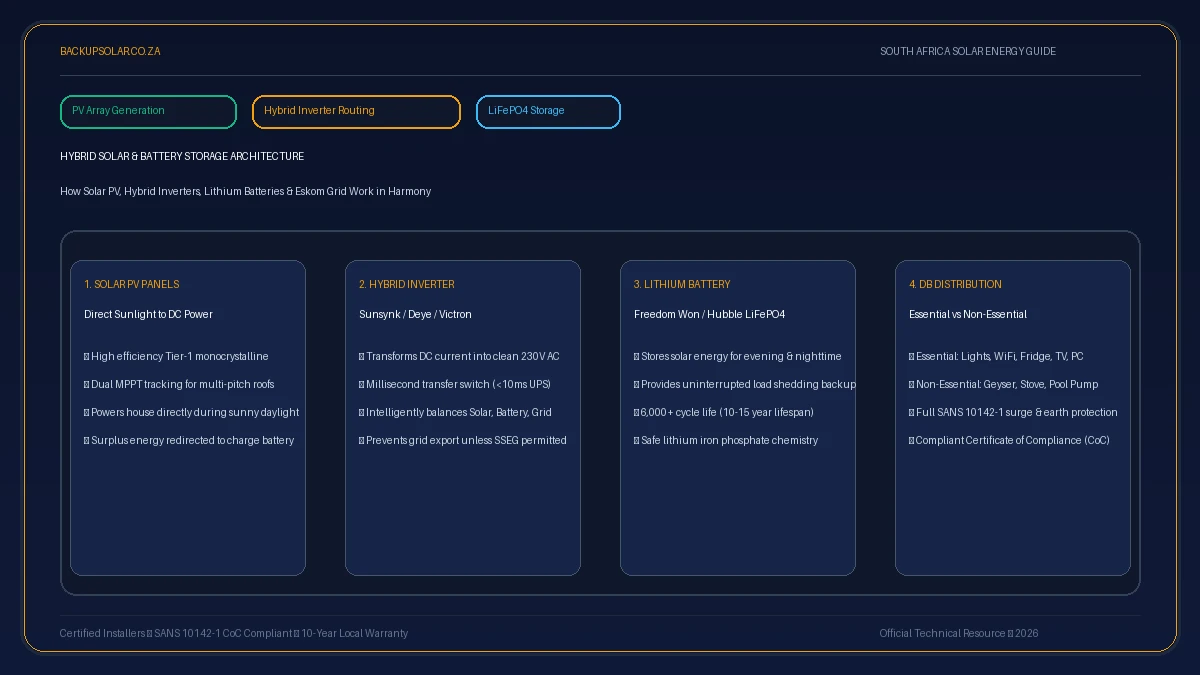
1. Monocrystalline Solar Panel Array (DC Generation)
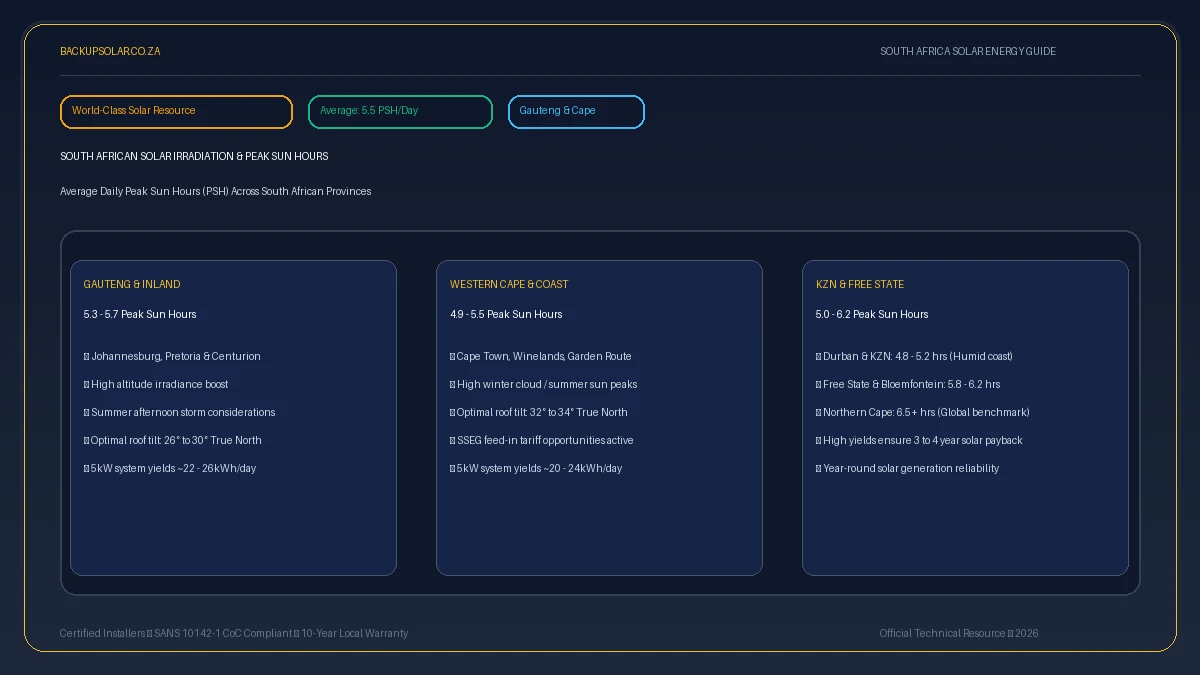
Installed on north, east, or west-facing roof pitches, Tier-1 solar panels capture sunlight and convert photon energy into Direct Current (DC) electricity. South Africa receives an exceptional average of 4.8 to 6.2 peak sun hours per day, providing world-class solar irradiance.
2. Intelligent Hybrid Inverter (The Brain)
The hybrid solar backup inverter (e.g. 5kW, 8kW, or 12kW Sunsynk, Deye, or Victron) manages incoming power from solar panels, the municipal grid (Eskom or municipality), and the lithium battery bank. In under 10 milliseconds during load shedding, it switches your home to battery backup power without resetting digital clocks, computers, or Wi-Fi routers.
3. Lithium Iron Phosphate (LiFePO4) Battery Storage
Surplus solar energy generated during midday is safely stored in high-density lithium batteries (5.12kWh to 15.36kWh capacity). When the sun sets or load shedding occurs in the evening, your home draws clean, silent power from the battery rather than expensive municipal electricity.
Essential vs Non-Essential Circuits (DB Board Splitting)
During installation, an accredited master wireman divides your home distribution board (DB) into two primary circuits to preserve battery backup life:
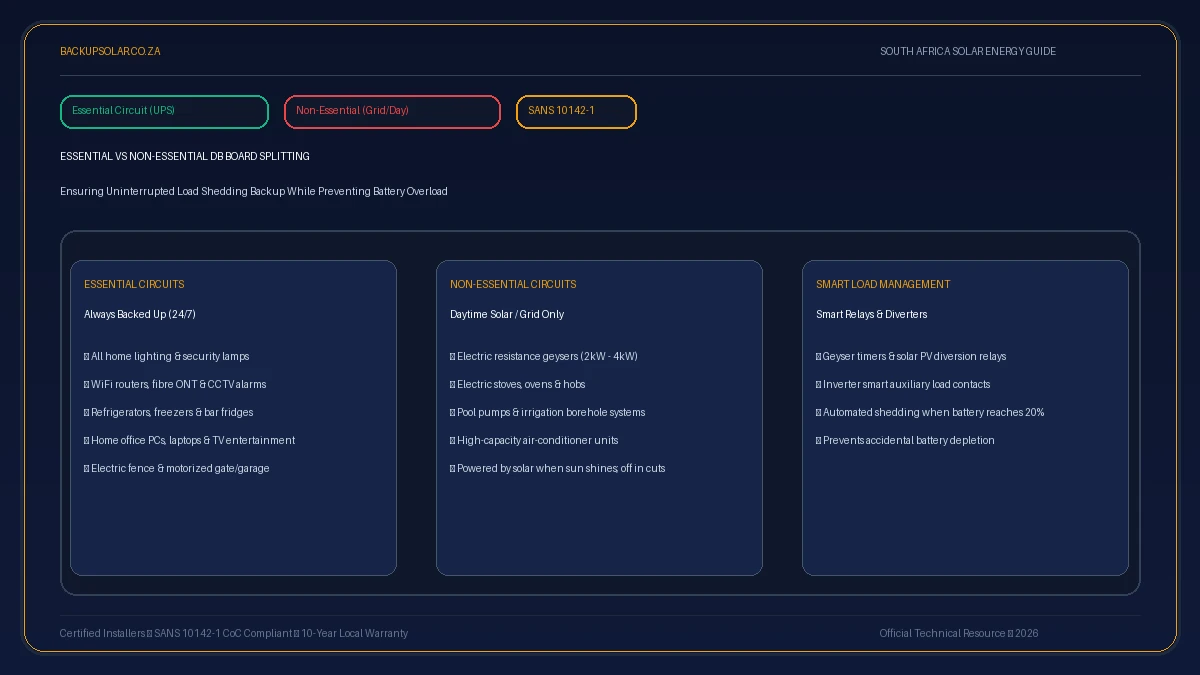
- Essential Circuits (Backed Up): Lights, plugs for televisions, fridges, Wi-Fi routers, security systems, garage door motors, and computers. These circuits remain powered continuously, day or night, outage or no outage.
- Non-Essential Circuits (Grid Dependant): High-draw electrical loads like standard electrical geysers, pool pump heating elements, and heavy electric ovens. These can be automated using CBI Astute smart relays to run only when excess solar power is being generated during the day.
Prepaid Meter Compatibility in South Africa
Many older South African prepaid electricity meters (such as Conlog or Landis+Gyr) will trip or enter tamper mode if solar electricity pushes back into the municipal grid. Modern hybrid solar backup inverters feature zero-export CT clamps (Current Transformers) that ensure 100% of solar power is consumed inside your home or stored in the battery, completely preventing prepaid meter lockouts.
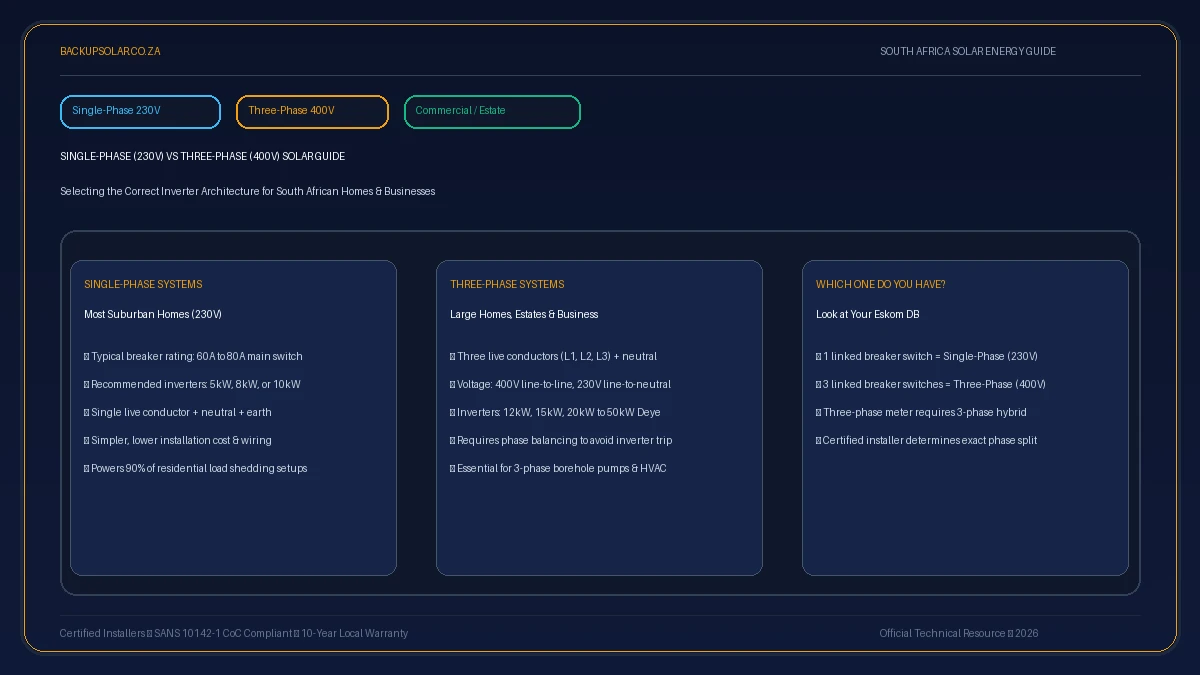
Single-Phase vs Three-Phase Home Solar Architecture
Selecting between single-phase (230V) and three-phase (400V) backup solar depends entirely on your property's existing electrical supply from Eskom or your local municipality:
Frequently Asked Questions About Home Solar Backup
How does a residential solar backup energy system work during load shedding?
When the Eskom grid fails, the hybrid solar inverter detects the voltage loss in under 10 milliseconds and automatically switches your home's essential electrical circuits to battery and solar power. Your lights, Wi-Fi router, fridge, TV, and security systems remain continuously powered without any blackout or equipment restart.
What is essential vs non-essential DB board splitting?
During installation, an accredited wireman divides your distribution board into essential circuits (lights, plugs, Wi-Fi, fridge, security) backed up by the lithium battery, and non-essential circuits (heavy geysers, electric stoves, pool pumps) powered only when solar or grid electricity is abundant. This prevents high-draw appliances from draining your battery during extended load shedding.
Will a home backup solar system trip my prepaid electricity meter?
No, provided your hybrid inverter is fitted with a Current Transformer (CT) clamp. The CT clamp monitors power flow at your main incoming feed and prevents excess solar electricity from pushing backward into the municipal grid, eliminating nuisance prepaid meter tamper trips.